Mantis Material: Elevate, Protect, Build.








We've all walked into a place and noticed that slightly tacky mat on the floor just inside the entrance. It’s such a simple, unassuming thing that it's easy to overlook. But in industries where a speck of dust can ruin a multi-million dollar microchip or compromise a sterile hospital environment, that humble sticky mat is the unsung hero at the front lines of contamination control. It quietly does a critical job that mops and vacuums simply can't match, and it does it with remarkable efficiency.
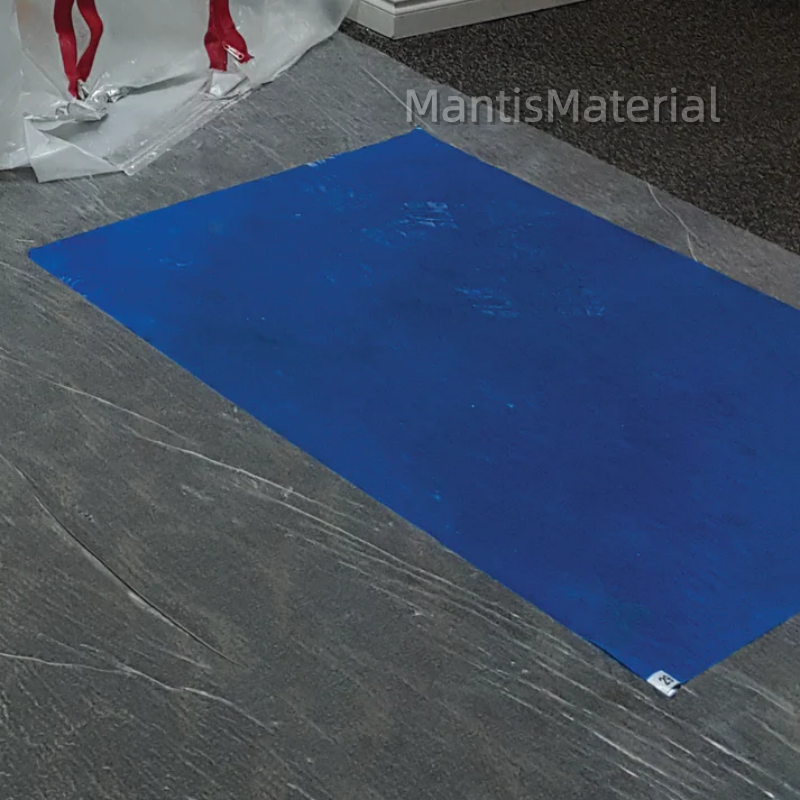
Think about the journey we all take to get to a cleanroom or a lab. Every step across a parking lot or a hallway picks up a microscopic universe of dirt, dust, and debris. A standard doormat might catch the big stuff, but it's the sticky mat that grabs the particles that are invisible to the naked eye. The secret is in the adhesive. It's not a messy, gooey glue that leaves a residue everywhere. It’s a clever, pressure-sensitive, water-based adhesive that’s eco-friendly to boot. When you step on it, it just works, holding onto contaminants firmly and keeping them from migrating any further.
What I really appreciate about a good sticky mat, like the ones from Mantis Material, is the sheer intelligence in its design. It's not just a single sticky sheet; it's a multi-layer stack, typically numbering anywhere from 30 to 60 layers. The idea is beautifully simple. When the top layer becomes visibly soiled with dirt and footprints, you don't need to replace the entire mat. You just peel off the top sheet. The numbered labels on the edge make this peel-off process incredibly easy, and importantly, the layer comes away cleanly, leaving no sticky residue behind. In a busy work environment, this speed and ease of use are invaluable.
Durability is another feature that gets overlooked until it's missing. The last thing anyone needs is a mat that tears when you're trying to peel off a dirty layer, leaving bits of film stuck to the floor that you then have to scrape off. These mats are engineered to be tear-resistant, capable of withstanding the constant traffic of boots and trolley wheels without falling apart. They also stay firmly anchored to the floor, thanks to a strong adhesive on the bottom layer, but when it's finally time to remove the whole mat, it comes up without damaging the floor surface.
The versatility of sticky mats is also quite impressive. While they are absolutely essential in controlled environments like semiconductor fabs, pharmaceutical production, and hospitals, their usefulness extends far beyond that. They're just as effective at the entrance to a construction site, helping to stop dust from being tracked into finished areas. They're a practical solution for workshops, offices, and even busy homes where you want to minimize the amount of dirt brought in from outside.
It’s a testament to the idea that sometimes the simplest solutions are the most effective. A sticky mat doesn't require any special training, maintenance, or electricity. It just sits there, ready to do its job, layer after layer. It’s a quiet, reliable, and incredibly cost-effective way to maintain a higher standard of cleanliness. So next time you step onto one and feel that gentle tackiness, take a moment to appreciate the hard work it's doing to keep the world around you just a little bit cleaner. It's not just a mat; it's the first line of defense.
 عربي
عربي Deutsch
 Français
 Italia
 Portugal
 España