Mantis Material: Elevate, Protect, Build.








Sticky mats, also called cleanroom adhesive mats or tack mats, are multilayer peel-off sheets designed to trap dust and dirt before they travel deeper into a space. Each layer is coated with a pressure-sensitive water-based adhesive that grabs particles from footwear and trolley wheels on contact. When the top sheet gets dirty, you simply peel it away to expose a fresh one underneath. Numbered labels on the corner make layer separation quick and obvious, so nobody wastes time hunting for the edge.
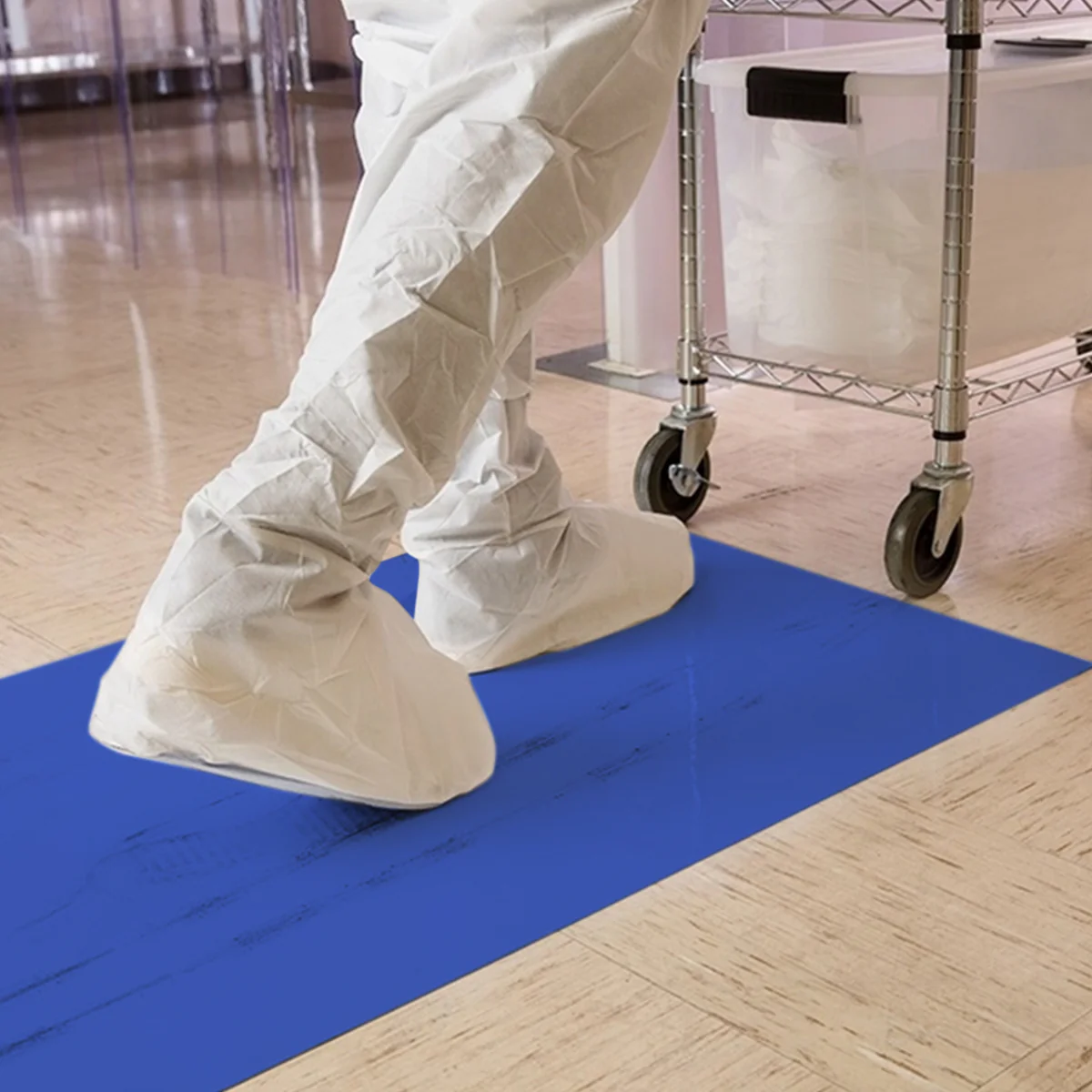
The construction is simple but practical. A low-residue PE film base keeps the mat flat against the floor without sliding, and the adhesive is formulated to hold firmly yet release cleanly when it is time to replace the pad. The sheets resist tearing during peeling even in busy doorways, which matters when people are walking through all day. Standard sizes include 0.913m by 1.13m, 0.9m by 0.9m, and 0.6m by 0.9m, with white, grey, and blue as common colors.
Where these mats earn their keep is at the boundary between clean and dirty. Cleanrooms in semiconductor and pharmaceutical production use them at airlocks and gowning areas. Hospitals place them at operating room entrances and lab doorways. Electronics plants rely on them to keep fine dust away from sensitive components, and construction crews lay them down during renovations to stop dust from migrating out of the work zone. Offices, gyms, and schools use them too, mainly to keep floors cleaner with less effort. The appeal is straightforward. A sticky mat is a cheap, low-tech line of defense that quietly does its job at the threshold.
 عربي
 Deutsch
 Français
 Italia
 Portugal
 España