Mantis Material: Elevate, Protect, Build.









Rain does not care about a construction schedule. It falls on exposed soil, turns it into muddy runoff, and sends that water looking for the nearest drain or stream. A silt fence is the simple answer to that problem. It is a temporary barrier of woven geotextile fabric, stretched across supporting posts and driven into the ground along the edges of a disturbed site. Its job is to slow the water down long enough for the soil to settle out, so what leaves the site is clearer than what arrived.
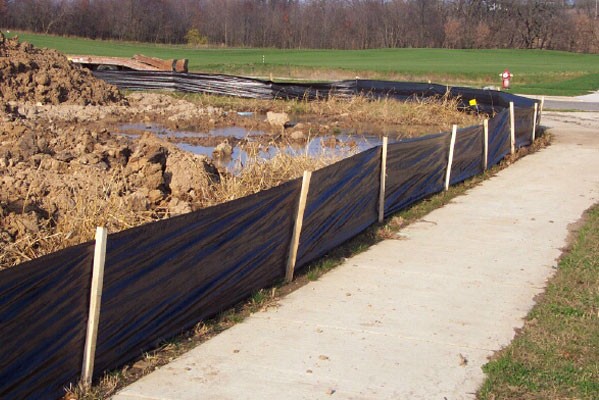
The Mantis silt fence comes in a standard roll of 3 feet by 500 feet, enough to wrap a serious stretch of perimeter in one go. The fabric is built from polypropylene yarns woven into a strong, permeable sheet. Water passes through the weave while suspended sediment stays behind. The material is UV stabilized, so a season or two of sunlight will not turn it brittle before the earthworks are finished.
Where it earns its keep is at the messy edges of a project. Crews install it along the toe of a slope, around stockpiles of excavated soil, and along the banks of swales and ditches where runoff gathers. It is not a permanent structure. It is not meant to be beautiful. It simply stands there, holding back the mud that would otherwise cloud a creek or clog a storm drain.
Anyone who has watched a silt fence do its work understands the appeal. It is cheap, it goes in fast, and it solves a problem that would otherwise cost far more to clean up. The fence itself fades into the background. The water downstream stays clear.
 عربي
 Deutsch
 Français
 Italia
 Portugal
 España