Mantis Material: Elevate, Protect, Build.








Onion mesh carries a name that undersells it. The same orange sheet with yellow stripes that wraps a scaffold on a construction site also shows up in fields and packing sheds, holding onions, potatoes and firewood. That double life says something about the material itself. It is woven from virgin HDPE in a wrap knit pattern, which gives it strength without weight. A roll weighs between 40 and 120gsm, light enough for one person to handle and tough enough to stay put once tied off.
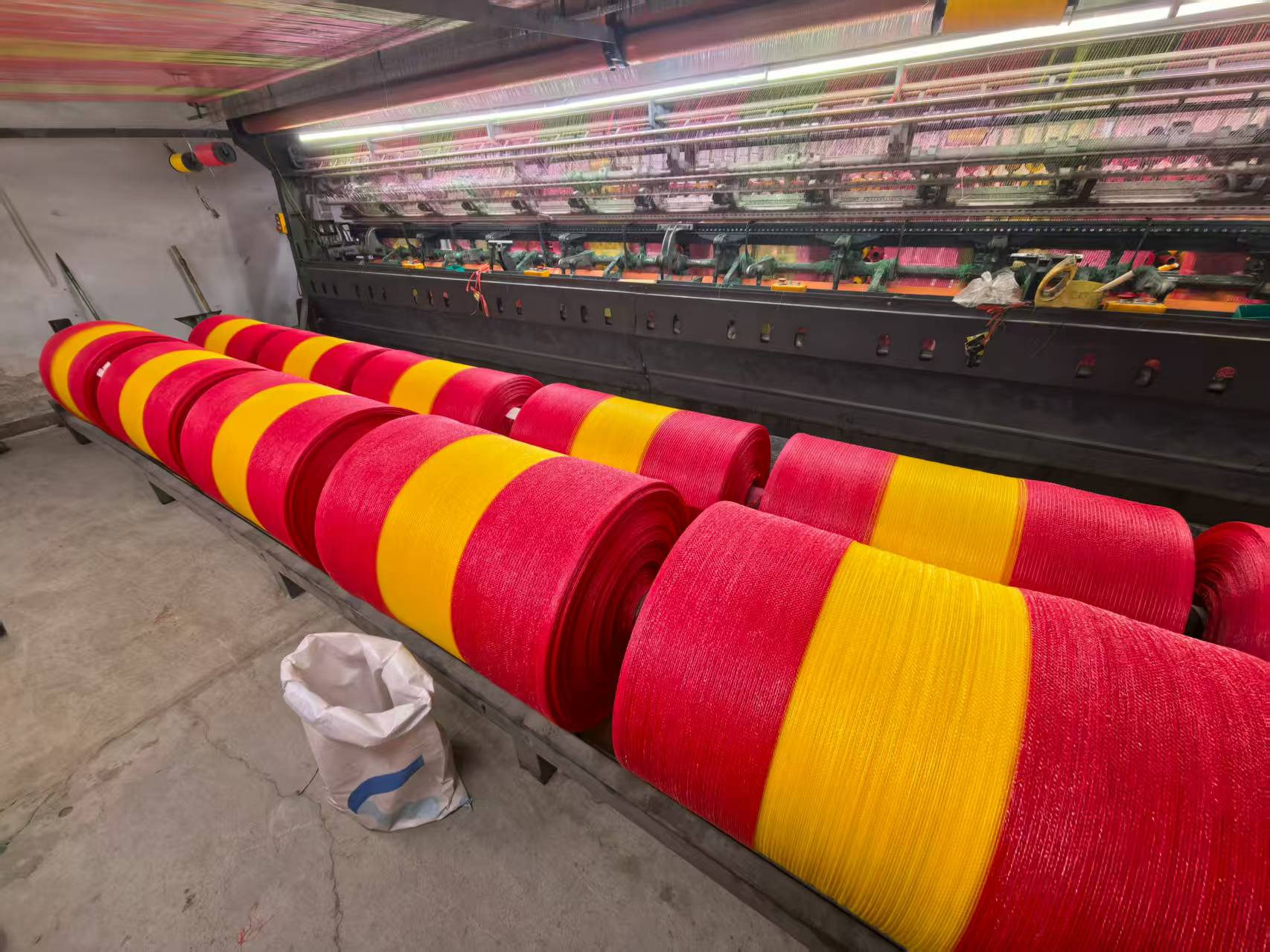
On a jobsite the mesh functions as a temporary barrier. Heavy duty ropes run along the top and bottom edges so a crew can lash it to posts in minutes without special tools. The bright orange and yellow colouring does the rest of the work. It is UV treated for outdoor exposure, and it resists weather long enough to cover short term maintenance shutdowns, scaffold enclosures and walkway separation. Rolls come in 0.9 by 50m, 1m by 50m and 1.5 by 50m, with custom sizes available.
In agriculture the same knitted structure becomes packaging. The open mesh lets air circulate around produce, which helps onions and potatoes stay dry and visible from harvest to retail. A drawstring or stitched hem closes the bag, and the material is recyclable once the job is done. The broader packaging industry is moving toward mono material designs that drop metal clips and simplify recycling streams, and onion mesh sits comfortably within that shift.
None of this is complicated. It is a sheet of mesh that understands two things at once. It should be seen when it guards a hazard, and it should breathe when it holds a harvest. That quiet versatility is why it keeps turning up in places that look nothing alike.
 عربي
 Deutsch
 Français
 Italia
 Portugal
 España