Mantis Material: Elevate, Protect, Build.







Dust never announces itself. It rides in on shoe soles and trolley wheels, settles onto surfaces that were spotless an hour ago, and causes trouble long before anyone notices. The sticky mat takes that problem seriously, and it does so at the doorway, before contamination gets any further.
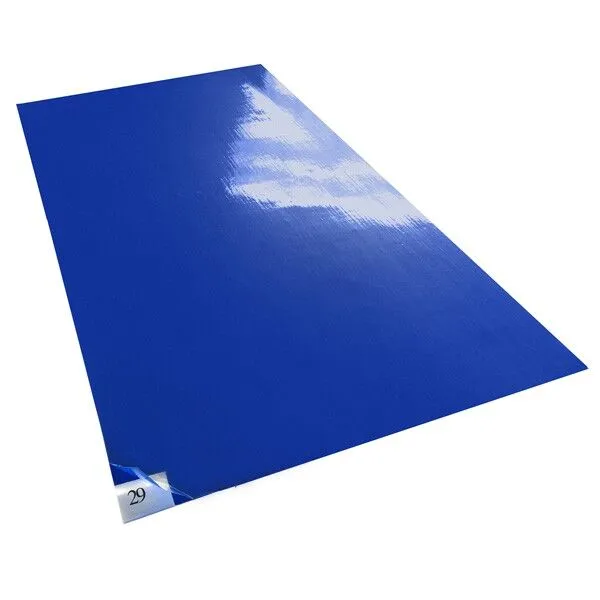
The idea behind it is almost stubbornly simple. A stack of polyethylene sheets sits on the floor at the entrance to a sensitive area, and each layer carries a pressure sensitive adhesive that grabs particles as people walk across it. When the top sheet is soiled, a numbered tab along the edge tells you it is time to peel it away, exposing a fresh sticky surface underneath. There is no residue left behind, no odor, and no drama. The adhesive is water based and the film is built to resist tearing during the peel, even in a doorway that sees constant traffic.
What makes the mat genuinely useful is how widely that doorway logic applies. Cleanrooms in semiconductor and pharmaceutical production place it at airlock entrances, where a single particle can ruin a batch. Hospitals use it outside operating rooms and laboratories, and electronics manufacturers rely on it to keep fine dust away from precision components. It also turns up in food production facilities, printing shops, and renovation sites where dust migration is a constant headache. Offices, schools, and gyms use it for a plainer reason. A cleaner entrance means less cleaning everywhere else.
Standard sheets measure 0.913m by 1.13m, with smaller options for tighter spots, and custom sizes are available. Nothing about the sticky mat is dramatic. It sits on the floor, catches what it can, and gets peeled away when it is full. That quiet, layered efficiency is exactly the point.
 عربي
 Deutsch
 Français
 Italia
 Portugal
 España