Mantis Material: Elevate, Protect, Build.








A sticky mat does not look like much sitting by a doorway. It is a thin, quiet layer of polyethylene film, usually blue or white, and most people walk over it without a second thought. That is exactly the point. The mat is there to catch what shoes and cart wheels drag in before any of it travels deeper into a cleanroom, a hospital ward, or a construction site where dust control matters.
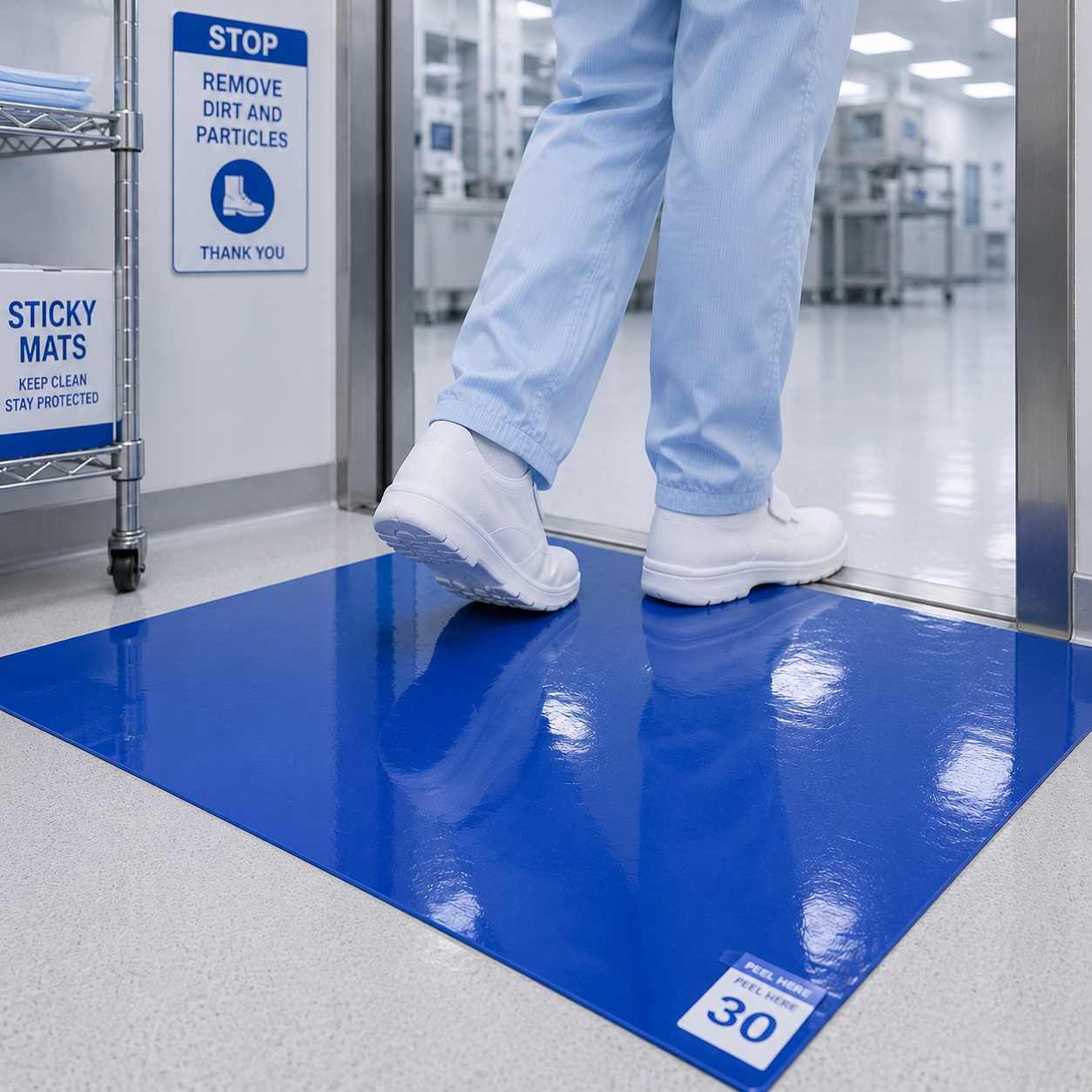
Each mat is built as a stack of thirty adhesive sheets, and the top layer does the work. The surface grabs dust, dirt, and fine particles on contact, and when it gets saturated, you peel it away to expose a fresh sheet underneath. The sheets are numbered from one to thirty, so it is easy to see how many layers are left and when a replacement is due. The low profile keeps the mat flat against the floor, which means trolleys roll over it without a bump and nobody trips on a curled edge.
The backing is self adhesive, so the mat sticks directly to a clean hard floor without a separate frame. A standard pad measures around 24 by 36 inches or 26 by 45 inches, with a thickness near 0.04mm, and the polyethylene construction holds up to daily foot traffic without tearing.
You will find these mats at cleanroom entrances, laboratory doorways, hospital corridors, food processing lines, and construction site thresholds. They are not glamorous, but they do a job that matters, and they do it quietly, one peel at a time.
 عربي
 Deutsch
 Français
 Italia
 Portugal
 España